
How a Hand-Knotted Rug Is Actually Made
Hazel Brannigan · 15 April 2026
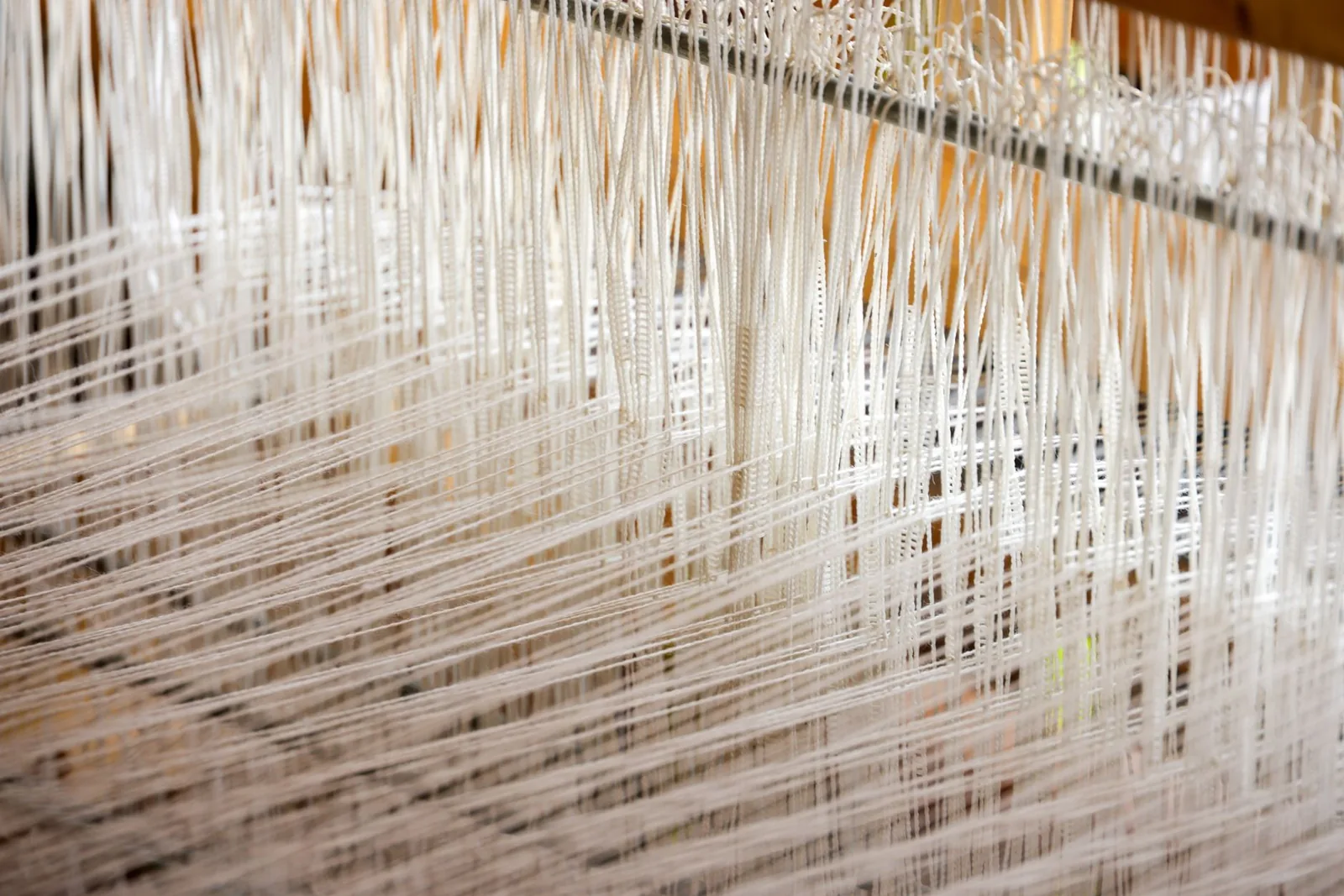
Warp, weft, knot, beat, repeat, several hundred thousand times.
The two sets of threads
Every woven rug is built on two elements. The warp runs vertically, held under tension on the loom, and forms the structural skeleton. The weft runs horizontally, passing over and under the warp to lock everything together.
The pile is a third element, tied onto the warp threads and cut, and it carries the pattern. Strip the pile away and the warp and weft would still be a functioning textile, which is precisely what a flatweave is.
A row at a time
The weaver ties a row of knots across the full width of the rug, one at a time, following a pattern. Then one or more weft threads are passed through and beaten down hard with a comb to compress the row.
That compression is what makes the finished rug dense and stable. An under-beaten rug is loose, distorts in use and eventually goes out of shape on the floor.
Why hand-knotted rugs are never quite square
A loom is under tension and the tension changes as the weight of finished work accumulates. Weavers compensate constantly, and the compensation is never perfect, so the finished piece is slightly irregular.
This is a characteristic rather than a defect. A perfectly rectangular rug with perfectly uniform pile is almost certainly machine-made, which is a legitimate product but a different one.
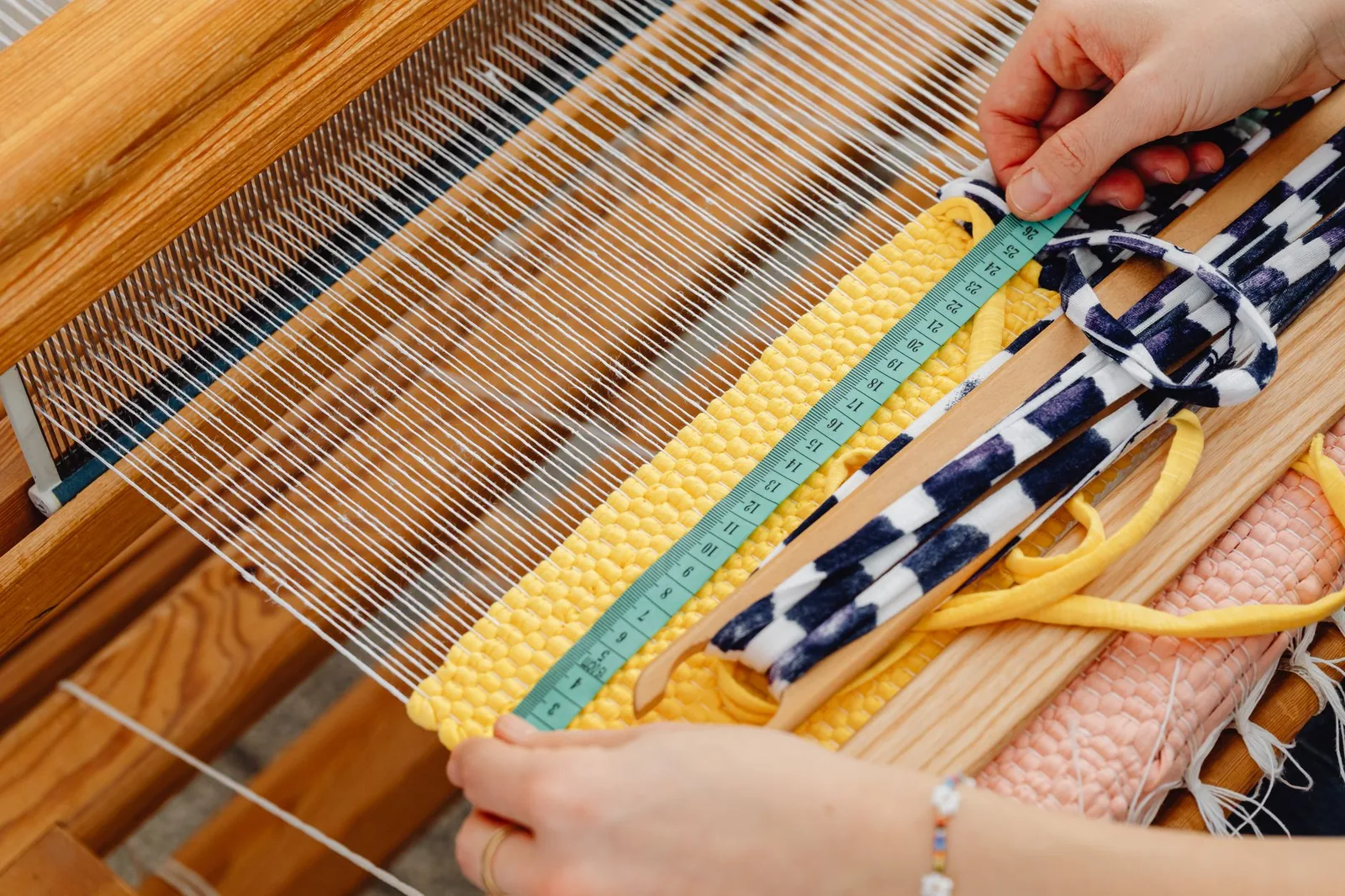
The time involved
A modest hand-knotted rug represents months of skilled work. A large fine one represents years, usually across several weavers. That is the entire explanation for the price, and it does not reduce with scale.
It is also why the trade is contracting in places where wages have risen, and why the surviving workshops increasingly make either very cheap coarse work or very expensive fine work, with the middle disappearing.
Reading the back
The reverse of a rug tells you more than the front. Hand-knotted work shows individual knots as small distinct nubs and the pattern reads clearly through to the back. Machine-made construction shows a regular grid and usually a backing material.
Tufted rugs, which are neither, have a fabric backing glued on. That glue is also the thing that fails, which is why a tufted rug has a much shorter life than either alternative.